Stop buying water. Why one bottle beats fifty.
· 2 min read · House & Co.
Pick up any ready-to-use cleaner in a supermarket. Shake it. What you feel sloshing around is water, about nine parts in ten. The bottle around it was made for one trip: shelf, sink, bin. We think that is the strangest habit in the home, and the easiest one to drop.
The bottle problem, in numbers
Around a third of all plastic made in the world is packaging, and most of it is used once. The Mediterranean takes about 229,000 tonnes of that every year, the equivalent of 500 shipping containers a day, and Egypt is the biggest single source. More than two thirds of our waste is not managed properly, so a bottle thrown away in Cairo has a real chance of ending up in the river.
Home care is a quiet part of that stream. A family that buys a 500 ml bottle of dish wash, floor cleaner, surface spray and hand wash every month gets through about fifty bottles a year. Fifty bottles of mostly water, driven across the country in a truck, used for a few weeks, thrown away.

What we do instead
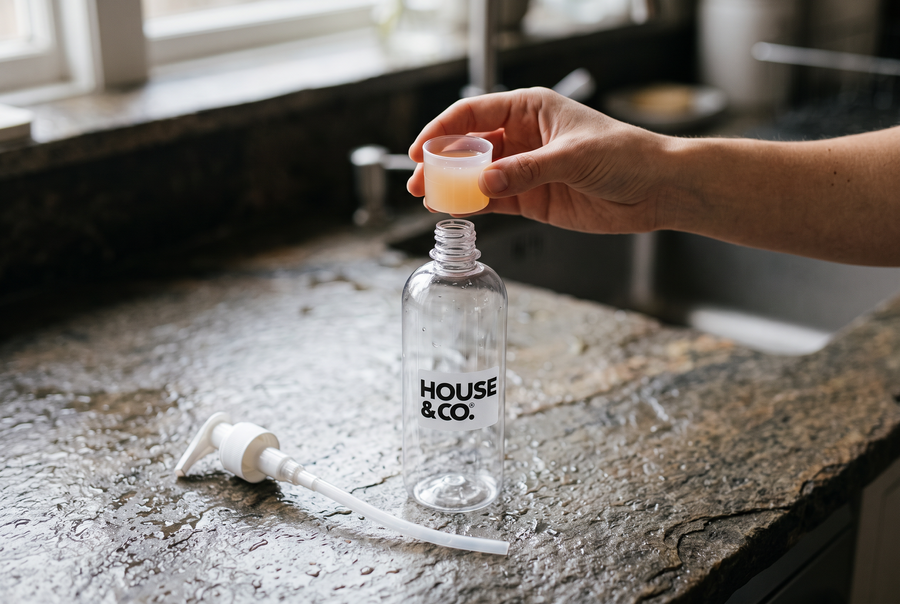
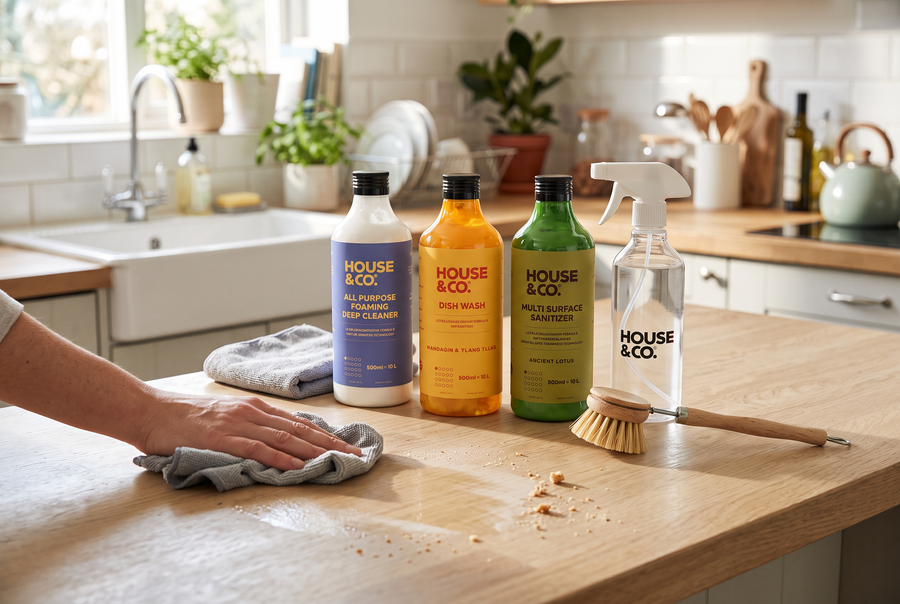
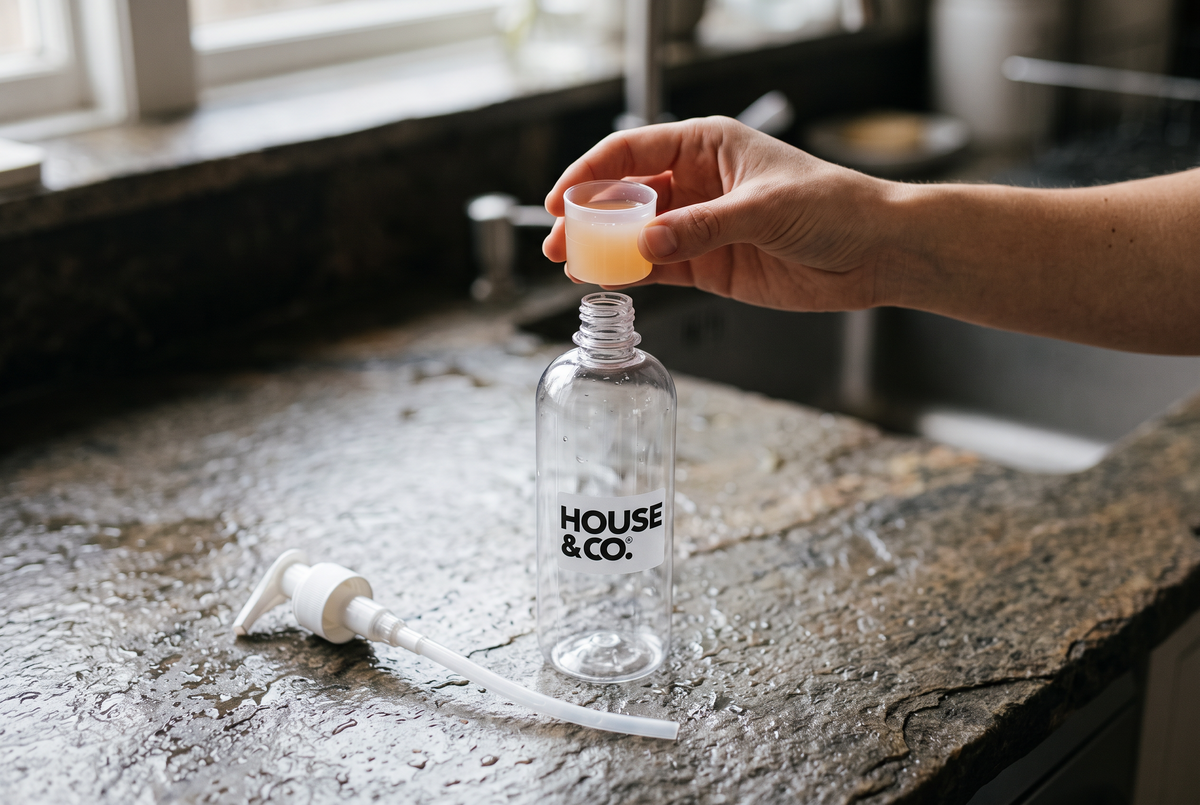
House & Co. sends the part that cleans and leaves the water to your tap. One 500 ml bottle of concentrate makes 10 litres of cleaner: one part to nineteen for the cleaners, one to eight for hand and body wash. You pour 25 ml into the refill bottle that comes free with it, top it up with water, and that is the whole job.
The maths is simple. Twenty refills from one bottle means twenty single-use bottles that are never made, filled, shipped or thrown away. Across a year, that family of fifty bottles comes down to about five. That is the 90% less plastic on our labels, and it is not a rounding trick, it is the dilution ratio.
It is not only the plastic
Water is heavy. Shipping ready-to-use cleaner means shipping water, and life-cycle studies of concentrated products put the saving at up to ten times less transport emissions and up to 90% lower carbon footprint than the big-brand equivalent. A box of our concentrates weighs what one of their bottles does.
Eco never means weak. Our formulas are German-engineered concentrates with plant-based surfactants and bio-enzymes where they help, and they are made to be diluted. A professional kitchen in Cairo uses the same bottle you do, just in a bigger size.

Where this is going
Today every bottle you refill saves about 90% of the plastic the old way needs. Our goal for 2030 is a home-care range with no plastic footprint at all. The refill bottle in your kitchen is the first step, and the easiest one you will take this year.
See how long one bottle lasts your home, or start with one concentrate. The refill bottle is on us.
Sources: IUCN, The Mediterranean: Mare Plasticum (2020); WWF, Out of the Plastic Trap (2018); World Bank waste-management data for Egypt; life-cycle analyses of concentrated cleaning products summarised by Which? and TriplePundit (2024).